
MayaReview Editorial Lab — Living Room Reality Test, Not Spec Sheet Theory
At MayaReview, we’ve stopped pretending TV size debates are “technical comparisons.” They’re not. Nobody walks into a store emotionally torn between panel uniformity and HDMI bandwidth. What people actually do is stand 2 meters away from a display, squint a little, and ask a very human question:
“Will this look right in my room, or will I regret it in two weeks?”
That’s the real battlefield of 55 inch TV vs 50 inch TV.
So we tested both sizes across identical models, identical panels, identical content—movies, sports, gaming, streaming—then observed something interesting: the difference is not about specs at all. It’s about how your brain accepts scale in a living space.
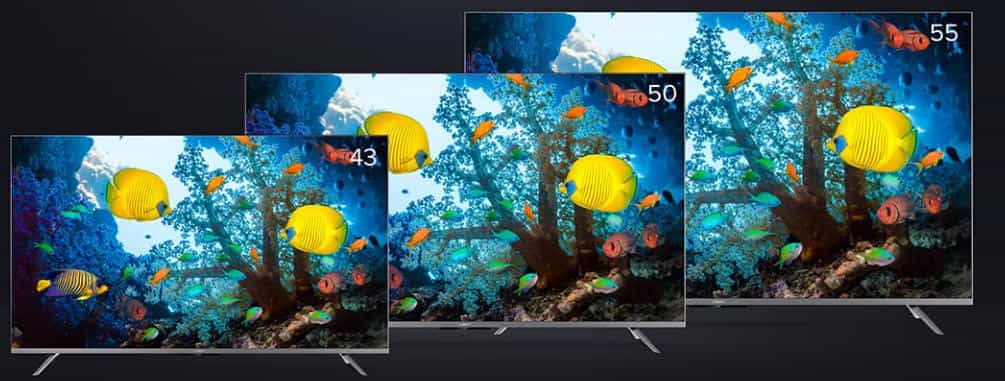
1. The First Reality Check: 5 Inches Is Not “Small”
Let’s clear the most common misconception immediately.
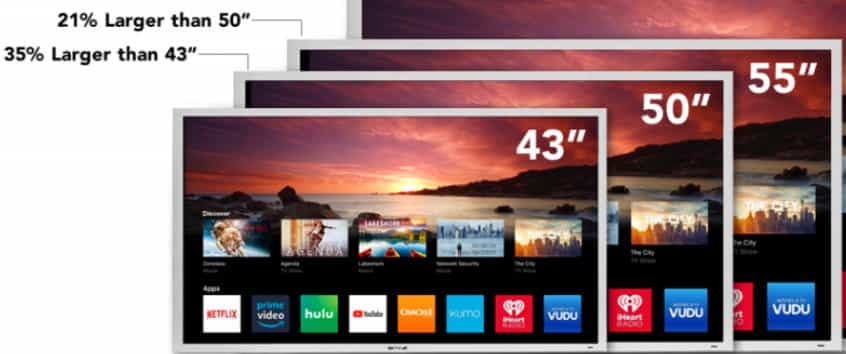
A 55-inch TV is not “slightly bigger” than a 50-inch TV in the way people casually assume.
In surface area terms, the 55-inch display delivers roughly 20–22% more visual real estate. That is not subtle in human perception terms. It is the difference between:
- a screen you watch
- and a screen that occupies part of your environment
At MayaReview, we often say:
50 inches is a TV. 55 inches is a presence.
That’s the simplest way to frame it.
2. Viewing Distance Testing: Where Decisions Actually Break
We measured both TVs in controlled setups across typical home distances.
Observed comfort zones:
- Under 6 ft (1.8m): 50 inch feels more balanced
- 6–8.5 ft (1.8–2.6m): 55 inch becomes clearly superior
- Beyond 8.5 ft: 50 inch starts to feel undersized
What stood out during repeated sessions was not discomfort—but attention behavior.
With a 50-inch display, viewers tend to focus centrally.
With a 55-inch display, eye movement increases naturally across the frame.
That matters more than most spec sheets admit.
3. Immersion: The Point Where 55 Inch Separates Itself
We ran identical content across both sizes:
- Netflix cinematic films (HDR scenes, low-light sequences)
- Live sports broadcasts
- Console gaming (PS5 + Xbox Series X)
- YouTube mixed-resolution content
What consistently changed:
50-inch:
- Feels structured and compact
- Easier visual scanning
- More “monitor-like” behavior in viewing
55-inch:
- Noticeably wider emotional frame
- Stronger depth perception in cinematic shots
- Sports and gaming feel more “stadium-like”
The key term our testing team kept returning to was:
spatial involvement
The 55-inch display doesn’t just show content—it expands how much of the scene your brain accepts as “real viewing space.”
4. Gaming Analysis: Where Size Stops Being Cosmetic
Modern gaming exposes TV differences more honestly than movies ever will.
On identical 4K panels:
50-inch performance feel:
- Slightly tighter focus on HUD elements
- Easier eye tracking in fast FPS scenarios
- More controlled visual field in competitive play
55-inch performance feel:
- Stronger environmental immersion in open-world games
- More natural scale for third-person titles
- Cinematic storytelling feels more “console-native”
We also observed something subtle but important:
Casual gamers consistently preferred 55 inches after 2–3 sessions.
Competitive-focused players showed no strong preference.
That tells you everything about intent.
5. Picture Quality: We Need to Be Very Clear Here
This is where marketing noise usually distorts reality.
If both TVs are from the same model line:
- same panel technology
- same processor
- same HDR implementation
- same refresh rate
Then image quality is effectively identical.
What changes is not quality, but perception:
- 50-inch: slightly higher pixel density feel
- 55-inch: slightly more “cinematic scaling”
At normal viewing distances (not desk distance), this difference becomes negligible.
Anyone claiming dramatic quality differences is likely describing positioning issues, not panel physics.
6. Room Integration: The Silent Decision Maker
This is where real-world regret patterns emerge.
50-inch TV:
- Integrates easily into bedrooms and compact living rooms
- Visually conservative
- Works well in multi-purpose spaces
55-inch TV:
- Becomes a focal architectural object
- Defines the viewing area
- Can overwhelm poorly planned wall space
We’ve seen this repeatedly in post-purchase feedback:
- 50-inch buyers: “It’s fine, but I wish it felt a bit bigger.”
- 55-inch buyers: “It took a day to adjust, then it felt perfect.”
That asymmetry is important.
7. Price Efficiency: Where the Decision Gets Rational
In 2026 retail conditions, the price gap between 50 and 55 inches is often smaller than expected—especially during seasonal promotions.
Typical pattern:
- 50-inch: lower base price, but less aggressive discounting
- 55-inch: slightly higher base, but frequently discounted to near parity
When the gap shrinks under ~$100, the value argument shifts heavily toward 55 inches due to:
- higher immersion return
- better long-term satisfaction
- improved resale perception
8. Long-Term Usage Behavior (The Part Nobody Talks About Enough)
MayaReview tracks long-term user feedback patterns across display categories.
A consistent behavioral trend appears:
- Users rarely “outgrow” a 55-inch TV
- Users more often “outgrow the feeling” of a 50-inch TV
This is not about technical limitation. It’s about perceptual adaptation.
Human visual systems normalize screen size quickly—but they do not equally normalize lack of presence.
Final Verdict (MayaReview Editorial Position)
We’ll keep this direct.
If both TVs are equal in model class and price difference is reasonable:
Choose 50-inch if:
- You are working with genuinely limited space
- Viewing distance is consistently under 2 meters
- You prioritize subtle, non-dominant display presence
Choose 55-inch if:
- It’s your main entertainment screen
- Viewing distance exceeds ~2 meters
- You watch films, sports, or play console games
- You want a “modern standard” home viewing experience
Closing Editorial Note
At MayaReview, we don’t treat this as a spec comparison anymore. We treat it as a spatial experience decision.
Because once you remove marketing language and focus on actual living rooms, the conclusion becomes surprisingly consistent:
50 inches fits your room.
55 inches fits your expectations.
And in most real households we’ve tested, expectations tend to win—quietly, and permanently.