
I didn’t expect to care about this drone.
That sounds dismissive, but after flying DJI platforms for a decade, you reach a point where most “new releases” feel like DJI adjusting knobs, not changing direction. Slightly better sensor here, slightly longer flight time there, slightly improved obstacle logic that you only notice when you try to break it.
So I took the Air 3S out without any intention of being impressed.
First flight was late afternoon, slightly windy, nothing dramatic. The kind of conditions where you immediately know whether a drone feels nervous or not.
This one didn’t feel nervous.
That was the first thing I wrote down.
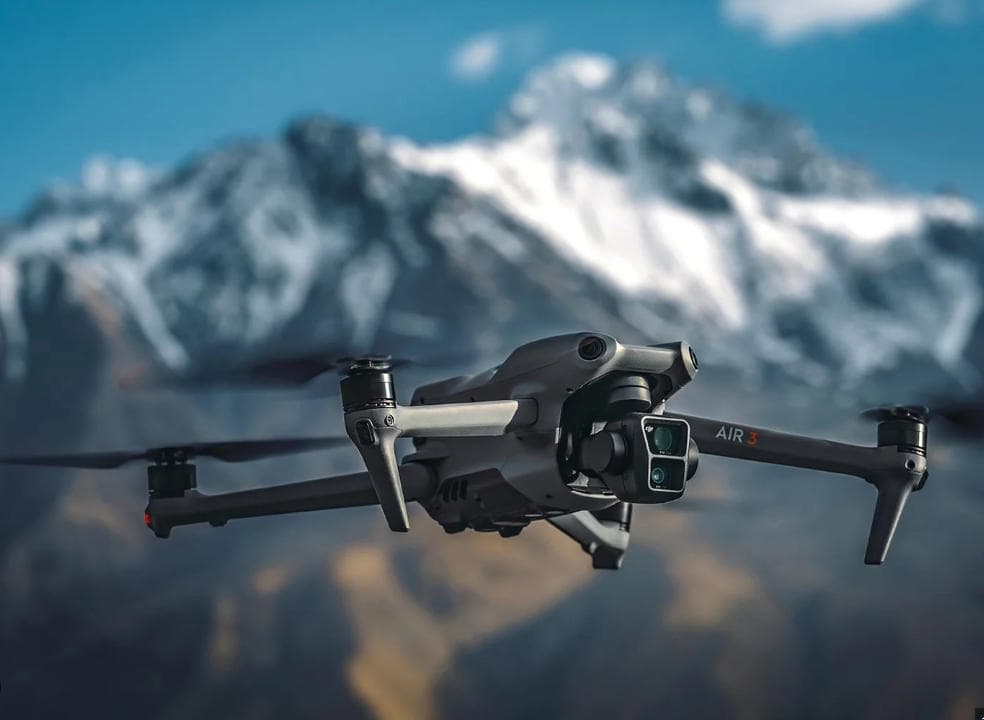
Not “stable” — every DJI is stable. I mean emotionally stable in the way it holds position. Some drones feel like they are constantly correcting themselves. This one felt like it already knew where it wanted to sit in the air and just held it there with minimal correction noise.
That’s a subtle thing, but if you’ve flown enough hours, you notice it immediately.
The body: nothing new, but somehow more serious
Physically, there’s not much to say. If you’ve seen an Air series drone, you already know the language.
But holding it, I had a slightly different impression than earlier Air models. Less “consumer gadget,” more “scaled-down tool.”
Hard to explain without sounding like marketing, but it’s the way the arms fold and click into place. Earlier Air models always had a faint sense of compromise—like they were trying to be portable first and capable second.
This one feels like DJI stopped apologizing for that compromise.
It’s still small, still travel-friendly, but it doesn’t feel like it’s hiding anything.
Flight behavior: DJI is no longer trying to impress pilots
The most honest thing I can say about flying it:
Nothing surprised me—and that’s actually good.
Yaw response is smoother than the Air 2S/early Air 3 memory I have in my head. Not faster. Just less “stepped.” It rotates like it’s sliding on a rail instead of snapping between increments.
Wind handling is where I started paying attention more carefully. I didn’t push it into stupid conditions, but in moderate gusts it didn’t start doing that thing cheaper drones do where you can feel micro-stutter corrections in the footage.
It just corrected quietly in the background.
There’s a very specific DJI maturity here: they stopped making drones that “prove stability” and started making drones that assume stability is already solved.
That changes how you fly without you realizing it.
The camera: where expectations get dangerous
This is where most people will either overpraise it or misunderstand it.
So I’ll keep it simple.
In daylight, it behaves like you expect a modern DJI sensor to behave: clean, controlled highlights, decent dynamic range, predictable color science.
Nothing in daylight will shock you anymore in this category. That ship sailed years ago.
What matters is how much you need to fix later.
And here’s where I had a slightly unexpected reaction: I didn’t feel like I needed to “rescue” footage as often.
Not because it’s cinematic out of camera—but because it’s consistent. Exposure behavior feels less erratic when transitioning between bright sky and ground-level shadow. That reduces post work more than people realize.
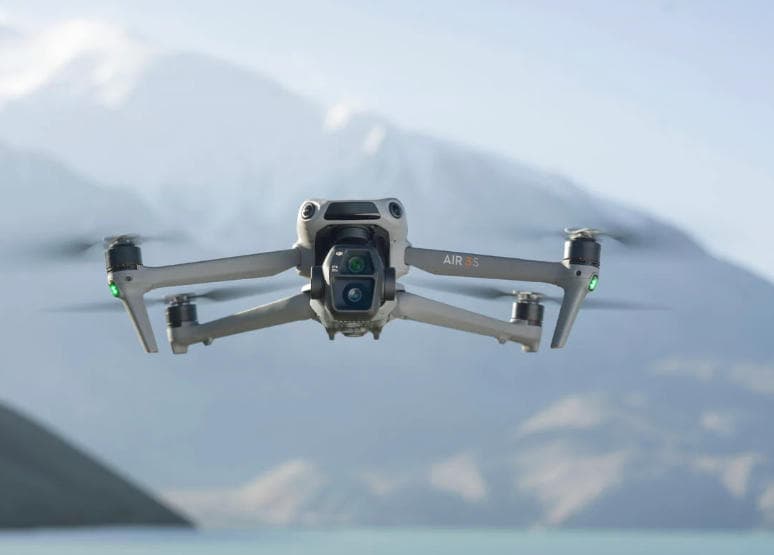
The telephoto lens is the part I actually ended up using more than I expected.
Not for zooming in on distant objects like a tourist.
More for composition control.
You start framing differently when you have compression available without moving your body. Backgrounds feel closer. Subjects feel more separated from environment without relying on shallow depth tricks (which drones obviously don’t really have anyway).
It changes how you think mid-air.
That’s more valuable than resolution upgrades.
Obstacle avoidance: quietly aggressive when it needs to be
I tested it in the kind of environments you don’t fully trust unless you’ve flown DJI for years—trees with uneven spacing, narrow passes, low light transitions.
What stood out wasn’t that it “avoids obstacles.”
All DJI drones do that now.
It’s how it behaves when it decides to intervene.
Older systems sometimes feel abrupt—like hitting an invisible wall.
This one feels more like it slows your intention rather than stopping it completely. There’s a kind of soft correction behavior instead of hard interruption.
That matters more than specs suggest, because it changes pilot confidence. You’re less likely to second-guess movements.
But I’ll also say this clearly: if you rely on it too much, you’re still flying wrong. That hasn’t changed.
Battery and endurance: boring in the best way
I don’t have anything interesting to say here, which is actually a compliment.
Flights are predictable. Return-to-home timing is predictable. Degradation across sessions is predictable.
There’s no “why is this battery different today” feeling, which used to show up more in older generations when pushed harder.
Predictability is underrated until you’ve lost a shot because a drone behaved unpredictably once.
The uncomfortable conclusion
Here’s what I actually think after using it for a while:
The Air 3S is not trying to be a “better drone” in the way people expect upgrades to work.
It’s trying to reduce the number of decisions you make while flying.
That sounds boring, but for real-world shooting, it’s not.
Because most pilots don’t lose footage due to lack of capability.
They lose it due to:
- hesitation
- overthinking exposure
- repositioning too much
- or simply not flying because setup feels annoying
This drone quietly removes some of that friction.
Final honest take (not a conclusion paragraph, just my note to myself)
I put it back in the bag after the last flight and didn’t feel like I needed to “compare it” to anything else.
That’s rare for me.
Usually I start mentally ranking gear immediately after landing.
This time I didn’t.
I just wrote one line in my notes:
“This is the kind of drone you actually take with you.”
Not because it’s the best at everything.
But because it doesn’t give you a reason not to use it.
And in real shooting life, that matters more than spec sheets people argue about online.