
I want to tell you something Samsung’s product page will not: their watch lineup was designed by someone who gets paid to make you spend more money.
I don’t mean this as a conspiracy. I mean it literally, as a compliment to the strategy. The Galaxy Watch 8 Standard, the Watch 8 Classic, the Watch Ultra, and the Watch FE are positioned so that each one solves one specific problem the previous option has, which means there’s always a reasonable-sounding justification to spend $150 more. Battery life not enough? Classic. Classic too expensive? Standard. Want something rugged? Ultra. Can’t afford any of them? FE. And somewhere in that decision tree, Samsung extracts more money from you than you planned to spend. There are Apple Watch guide.
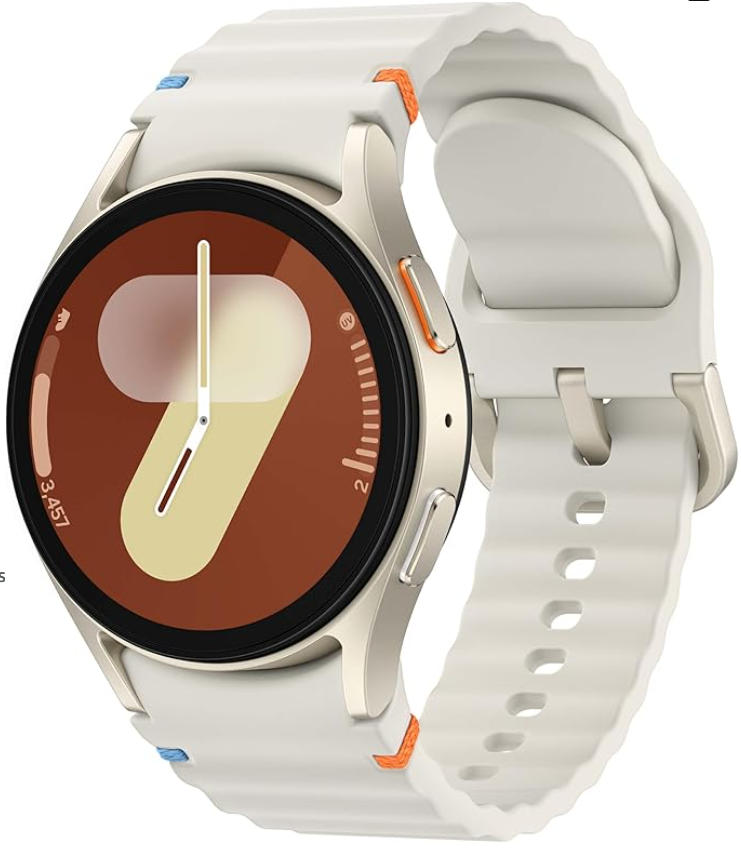
I’ve been through this loop twice in the last year with two different people. One ended up with an Ultra he didn’t need. One bought an FE and then immediately wished she’d spent more. I’m writing this to help you avoid both outcomes.
The thing you need to know before any of this
Galaxy Watch does not work with iPhone. At all. No partial functionality, no “some features work” — completely incompatible. If you have an iPhone and want a smartwatch, the Apple Watch is your answer and this article is not for you.
Galaxy Watch works with any Android phone running Android 13 or later. But here’s the part Samsung mentions quietly in tiny font: it works best with Samsung phones. If you have a Samsung Galaxy, you get the full experience — blood pressure monitoring (where available), Samsung Pay integration, Galaxy ecosystem features, the works. If you have a Pixel or a OnePlus or any other Android phone, you still get most health tracking and notifications, but certain features — body composition analysis, some sleep coaching features, blood pressure on supported models — require the Samsung Health app in full form, which on non-Samsung phones sometimes behaves like a tenant who lives there but isn’t entirely comfortable.
This isn’t a dealbreaker. It’s a caveat worth knowing before you spend $350.
The lineup as it stands
Four watches, four very different purposes, two of which overlap in ways that will drive you slightly mad.
Galaxy Watch FE sits at $199, and it is the most underestimated thing Samsung makes. The FE is essentially a rebadged Galaxy Watch 4 with an upgraded sapphire glass screen — same BioActive sensor, same ECG capability, same body composition analysis — running on an older Exynos W920 chip instead of the newer W1000. In everyday use, the chip difference is almost imperceptible for someone who checks notifications, tracks workouts, and looks at their heart rate. The battery is a 247mAh cell that realistically gets you 22 to 24 hours without the always-on display. One size — 40mm. No 44mm option. No rotating bezel. No titanium anything.
It lacks sleep apnea detection, which matters if that’s a feature you specifically want. Otherwise, it has every health sensor the expensive watches have, at $150 less than the next step up. That’s not nothing.
Galaxy Watch 8 starts at $299 for the 40mm, $329 for the 44mm. This is the one most people end up buying because it’s in the middle of the lineup and “middle” feels safe. The Exynos W1000 chip is legitimately faster than what’s in the FE, apps load more quickly, the watch face doesn’t stutter. Battery on the 40mm is about 30 hours in real testing with the always-on display active, which is one full day and a few hours of buffer. The 44mm has a 425mAh battery that behaves similarly but gives you a little more room. Sleep apnea detection is here. The BioActive sensor is the same generation as the Classic and Ultra.
The screen is a 1.3-inch Super AMOLED at 462 PPI, which in practice means it’s sharp and visible in sunlight. New for 2025: the “cushion” case design with Dynamic Lugs that are supposed to sit more comfortably on smaller wrists. It does sit better. Whether that justifies the design change from the Watch 7 is an aesthetic question, not a functional one.
What the Watch 8 doesn’t have: a rotating bezel, and a longer battery life. These are the exact reasons the Classic exists.
Galaxy Watch 8 Classic is $499 for the one size (46mm), and the rotating bezel is the entire pitch. I say this without judgment — a physical rotating bezel for navigating the watch interface is genuinely better than swiping on a tiny screen, especially if your fingers are not precision instruments. It’s satisfying in a way that’s hard to explain until you’ve used one, in the same way that a good volume knob on an amp is satisfying versus touching a flat surface to change a number.
The Classic also has a 445mAh battery that in real testing consistently hits 40 hours, which is meaningfully different from 30 — it means you charge it every other night instead of every night. For sleep tracking that matters: if you charge overnight, you lose sleep data. If you charge while you shower in the morning, you have to remember to do that every single morning or you run out of battery before bed. The Classic’s 40-hour life gives you more flexibility in when you charge without the habit becoming a burden.
At 46mm it is a large watch. Some people love a watch that makes a statement. Some people put it on and feel like they borrowed something from a larger person. Know which one you are before you buy.
Galaxy Watch Ultra was $649 at launch, now more often found around $550 on sale. This one I have the most complicated feelings about. The titanium frame is real — it’s proper aerospace titanium, not decorative — and the 10ATM water resistance versus the standard 5ATM means it handles actual water activities rather than just surviving the rain. The battery is a 590mAh cell that gets you 60 hours in battery saver mode or around 48 hours with normal use. For comparison, the Apple Watch Ultra 3 is in the same general territory.
What the Ultra has that nothing else in the Samsung lineup has: a flat sapphire crystal display (rather than curved glass), three physical side buttons instead of two, and a temperature range that keeps it functional from -20°C to 55°C. If you’re mountaineering, doing serious ocean swimming, or working outdoors in genuinely extreme conditions, these specifications are not marketing points — they’re functional requirements.
If you are not those people, you are paying $250 more than the Classic for a watch that’s larger (47mm), heavier (60.5 grams versus 63 grams for the Classic, oddly close), and built for conditions you’ll never encounter. The Ultra’s battery advantage over the Classic is real. The durability advantage is real. Whether either of those things matter to your actual life is a question only you can answer, and I’d suggest answering it honestly before reaching for your credit card.
The health features: what actually works
Every Galaxy Watch from the FE upward has the BioActive sensor, which does optical heart rate, ECG, and bioelectrical impedance analysis (body composition — body fat percentage, skeletal muscle, water weight). The ECG is FDA-cleared and legitimately catches atrial fibrillation. I know someone whose Galaxy Watch 7 flagged an irregular rhythm at 2am during sleep; she saw a cardiologist the following week, found out she had AFib she hadn’t known about, and is now on medication that’s materially changed her situation. That is a real outcome.
Sleep apnea detection works by analyzing breathing patterns during sleep over time. You need to wear the watch to bed consistently, and the watch needs consistent nightly wear to build a baseline. If you’re the kind of person who charges overnight, you lose sleep data — this is the most common complaint in Galaxy Watch reviews and it’s completely valid. The Ultra and Classic’s battery advantage here is practical, not theoretical.
The Gemini AI assistant is built in on the Watch 8 models. It’s useful for quick questions and setting reminders, less useful for anything that requires context or follow-up. Think of it as a voice interface to your phone rather than an actual AI companion. It does not work offline.
One thing that’s improved on the Watch 8 generation: heart rate accuracy during workouts. Previous generations had accuracy issues during high-intensity intervals specifically — the sensor would lag or misread during rapid heart rate changes. The Exynos W1000 paired with improved sampling algorithms is noticeably better, though still not at Garmin’s level for serious athletic training. If you are training for competition and heart rate data is critical to your training plan, a dedicated fitness watch like a Garmin Forerunner is still the more rigorous tool. Galaxy Watch is excellent for people who exercise seriously but aren’t optimizing at that level.
What I’d actually tell a friend
If you have a Samsung phone and want the best all-around experience: Galaxy Watch 8 Classic, $499. The rotating bezel, the 40-hour battery, and the full Samsung ecosystem integration make it the version where nothing feels compromised. It’s expensive. It’s worth it if this is a device you’ll use every day for two or three years, which is the realistic lifespan before the battery health degrades enough to matter.
If $499 is too much and you want most of the same experience: Galaxy Watch 8, 44mm, $329. The extra $30 over the 40mm gets you a meaningfully larger battery. Sleep tracking is better when you’re not watching your battery percentage nervously at 11pm. Skip the 40mm unless wrist size is a constraint.
If you want to try a Galaxy Watch without committing to a flagship price: Watch FE at $199. You’re giving up sleep apnea detection and the newer chip, and you have only the 40mm size. You’re keeping ECG, body composition, accurate heart rate, GPS, and the full health tracking suite. For someone not sure if they’ll use a smartwatch consistently, this is the right amount to spend.
The Ultra: only if you’re actually outdoors in extreme conditions regularly, or if battery anxiety is keeping you from sleeping and you want to charge twice a week instead of daily.
There is one last thing. Samsung changed the watch strap system on the Watch 8 lineup — new proprietary connectors, not compatible with older Galaxy Watch bands. This was not announced loudly. If you have a drawer full of Galaxy Watch bands from previous purchases, they do not fit the Watch 8. I am mentioning this because it will be annoying to discover at home after the box is open. Now you know before the box is open.
Maya has used Galaxy Watch hardware going back to the Watch 4. She currently uses a Watch 8 Classic and charges it every Tuesday and Thursday, which feels like the right relationship with a watch battery. Prices are U.S. retail as of May 2026 and will fluctuate — Samsung runs sales constantly.