
By Maya | mayareview.com | May 2026
I stood in my living room holding my WH-1000XM5 for a full ten minutes, trying to talk myself out of buying its replacement.
The XM5s worked perfectly. Three years of daily use — flights, subway commutes, open-plan offices, the specific hell of working from home while your upstairs neighbor apparently spends every afternoon rearranging furniture — and not a single problem. The ANC still worked. The battery still lasted. The ear pads were slightly flattened in the way ear pads get when someone has been pressing their head against them for thousands of hours, but that’s not a malfunction, that’s a relationship.
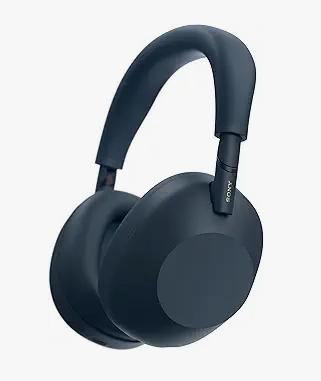
I bought the XM6 anyway. Partly because I review tech for a living and that’s a legitimate professional justification, and partly because I’d been eyeing that “buy now” button for two months and eventually your willpower just gets tired.
I’ve been wearing them daily for the past several months. Here’s the honest version of whether that purchase made sense — and more importantly, whether it makes sense for you.
What Sony actually changed
Three years between generations is a long gap by Sony’s own standards, and the XM6 reflects that wait in ways that are subtle to describe but immediately apparent when you put them on.
The biggest physical change: they fold again. The XM5 controversially ditched the folding hinge design, making them sleeker in hand but genuinely annoying to pack. The XM6 brings folding back, collapsing the ear cups inward so the whole headphone becomes a compact bundle that fits properly in a bag without requiring a dedicated compartment. It sounds minor. After one flight where I no longer had to do the overhead-bin tetris that the XM5 case demanded, I was ready to call it a decisive victory.
The headband is wider and flatter, asymmetrical by design so you can tell at a glance which way round they go — a small thing that I didn’t know I’d appreciate until I stopped putting them on backwards in the dark at 6am. The ear cups are slightly rounder, slightly firmer in clamping pressure, and they swivel to lay flat against your neck when pushed down, which is how a normal person wears headphones when talking to someone for more than thirty seconds.
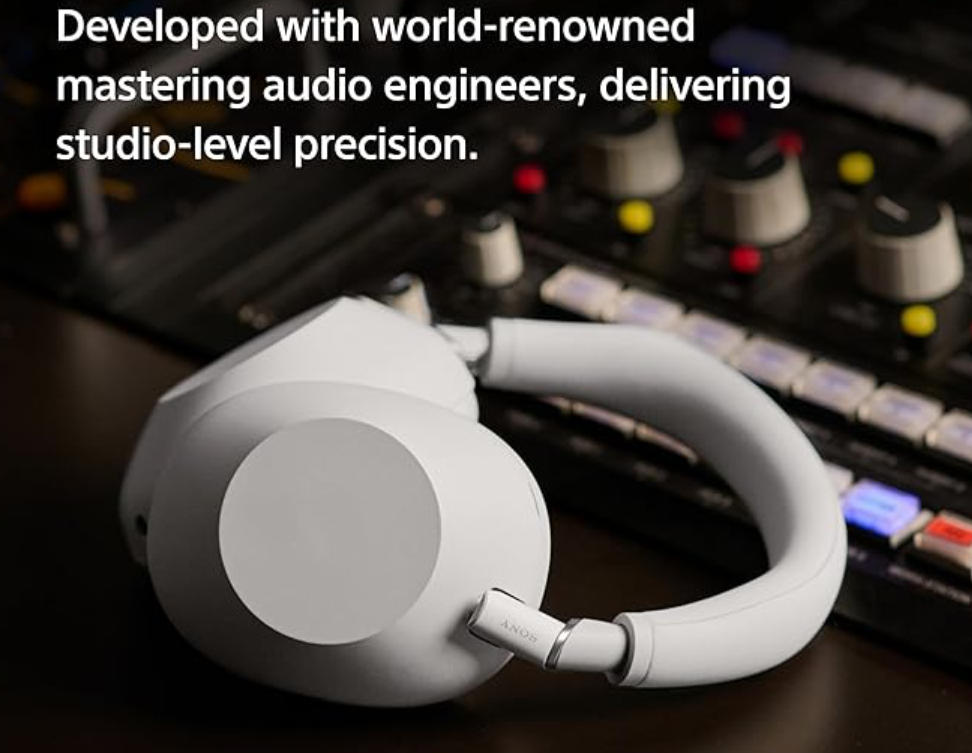
Inside: the new QN3 noise canceling processor handling 12 microphones, up from the XM5’s 8. Six of those microphones are dedicated to call quality, forming an AI beamforming system that isolates your voice and attenuates everything else when you’re speaking. The QN3 is seven times faster than the QN1 in the XM5, which is the kind of number that sounds impressive in a press release and actually means something real in practice.
The noise canceling, which is the whole point
Let me be precise, because “better ANC” is a phrase that has been stretched thin by marketing departments across the industry.
The XM6’s noise canceling improvement over the XM5 is real and measurable in the frequency ranges that matter most for everyday environments — it cuts more in the upper bass and midrange, which is where HVAC systems, office chatter, and the kind of low-frequency road noise you hear on a bus actually live. High-pitched sounds are also more attenuated than before, which matters if you work near someone who has decided that their personal brand includes speaking at a volume reserved for outdoor festivals.
In direct A/B testing between the XM5 and XM6 in a busy café: the XM5 turned the espresso machine behind the counter into a muffled suggestion. The XM6 turned it into an almost-nothing. On a plane, the XM5 made the engine roar into a low background hum. The XM6 pushed it down another step toward actual quiet — not silence, but the kind of quiet where you stop being aware of the noise.
Is it a generation leap? No. Is it a meaningful step? Yes. The XM5 was already so good that “better” has diminishing returns, and the XM6 is operating at the edge of what physics currently allows for feedforward-feedback ANC in a consumer form factor. If you own XM5s and are perfectly happy with the ANC, the XM6 won’t transform your experience of the world. If you’re coming from anything older or anything cheaper, the XM6 will.
The call quality, which nobody is talking about enough
This is the upgrade that changed my daily life more than any spec sheet number.
The XM5’s call microphones were, let me put this diplomatically, not its strongest feature. On a Zoom call in a coffee shop, people on the other end could hear the coffee shop. Not clearly — the ANC did some work — but enough that I’d apologize for background noise and feel vaguely embarrassed for the rest of the meeting.
The XM6’s six-microphone beamforming system for calls is a different category of performance. I took a call from a street corner with a bus passing thirty feet away. The person on the other end said they could hear me perfectly and asked if I was at home. I was not at home. There was a bus. They didn’t hear it. I don’t fully know how to explain this in non-engineering terms except to say: it works in a way that I did not believe it would until it did.
The microphone system uses what Sony calls “voice activity detection” — it can tell whether your mouth is moving, and if it isn’t, it aggressively attenuates everything near you so background noise can’t bleed into the call. When you start speaking, it opens up and focuses on your voice. The result is that pauses in your speech produce near-silence on the receiving end rather than a wave of café ambiance.
For anyone who takes calls regularly in environments that aren’t a quiet room: this upgrade alone has a case.
Sound quality, honestly assessed
The XM6 was developed in collaboration with mastering audio engineers, and Sony mentions this frequently enough that I started to wonder if the engineers were contractually owed a certain number of citations per press release.
But it’s not just marketing. The new carbon fiber dome driver does produce a different listening experience from the XM5 — the bass is slightly heavier, the midrange has more presence, female vocals have a bit more bite and clarity. The tuning is warmer and more engaging without crossing into basshead territory. For most music, streaming podcasts, and casual listening: excellent. For audiophiles chasing a flat reference response: neither the XM5 nor XM6 was ever your headphone, and both support LDAC for high-resolution wireless audio if you want to push quality up.
I’ve been listening through these for six months across genres I shouldn’t admit to, commutes that are longer than anyone should have, and one particularly long flight where I watched four episodes of something I will also not admit to. The sound has never once made me want to take them off. That’s the actual bar.
Battery, fit, and the things that matter at hour five
Thirty hours with ANC on. Forty hours with ANC off. Three minutes of charging for 90 minutes of playback — useful, though I haven’t tested that claim directly since I’ve never been that disorganized. In real daily use I charge every three to four days, which is enough that “charging” stopped being a category I think about.
The fit changed in a way that took me about a week to adjust to. The XM6’s clamping force is slightly higher than the XM5 — tighter seal, better passive isolation, but more pressure on the ears after extended sessions. I have a somewhat narrow head and still felt some fatigue around hour three on long wearing days. My colleague with a larger head said he noticed no difference. The ear cushions are plush and the headband distributes weight well. If you’re trying them on in a store: wear them for five minutes, not thirty seconds.
One thing that didn’t change and still quietly irritates me: the touch controls are on the right ear cup and require gestures that I have misregistered at least twice a week for three years of XM5 ownership. The XM6 has the same control scheme. I have advanced to misregistering them at roughly the same rate on new hardware. This is, apparently, entirely a me problem.
The XM5 question
If you own XM5s: I would not sell them to fund an XM6 unless the call quality issue has specifically bothered you, or the non-folding design has been a genuine travel problem, or you just want the incremental ANC improvement and have money you’d like to spend on audio hardware. The XM5 is still an excellent pair of headphones. It will continue to be an excellent pair of headphones. The XM6 is better, and “better” doesn’t automatically mean “better for you specifically right now.”
If you don’t own Sony noise-canceling headphones at this tier: the XM6 is the one to buy. It’s $449 and has gone on sale for $398 within months of release, which is Sony’s version of telling you the $449 price is negotiable. At $399-449 it competes directly with the Bose QuietComfort Ultra ($429) and both are excellent — the Bose has a slight edge in raw ANC performance in some frequency ranges, the Sony has better battery, better call quality, and a more engaging sound signature. I own the Sony. My partner owns the Bose. We’ve compared them enough times to conclude that you cannot go wrong with either and the argument has become mildly tedious.
Who should buy this
First-time buyer in this tier who takes calls, travels, or works in noisy environments: yes, immediately, this is the answer. The complete package — ANC, call quality, battery, comfort, build — is the best in class at the price.
XM5 owner unhappy with call quality specifically: yes. The microphone system difference is real and meaningful.
XM5 owner who is generally happy: maybe wait for the XM7, or buy the XM6 when it goes on sale and sell your XM5s. The upgrade is genuine; whether it’s urgent is a personal question.
Budget-constrained buyer: the XM5 can now be found for $250-280 on sale and represents genuinely excellent value at that price. Three-year-old flagship is still a flagship.
I still have my XM5s, sitting in their zipper case in a drawer. I keep telling myself I’ll sell them. I don’t. They’re good headphones, and there’s something vaguely ungrateful about selling a thing that served you that well just because a newer version exists.
The XM6s are better. Not so much better that the XM5s should feel inadequate. Just enough better that I’m not going back.