
I came home from a two-week work trip last year and unpacked my bag to find my Anker 26800 with 67% battery remaining.
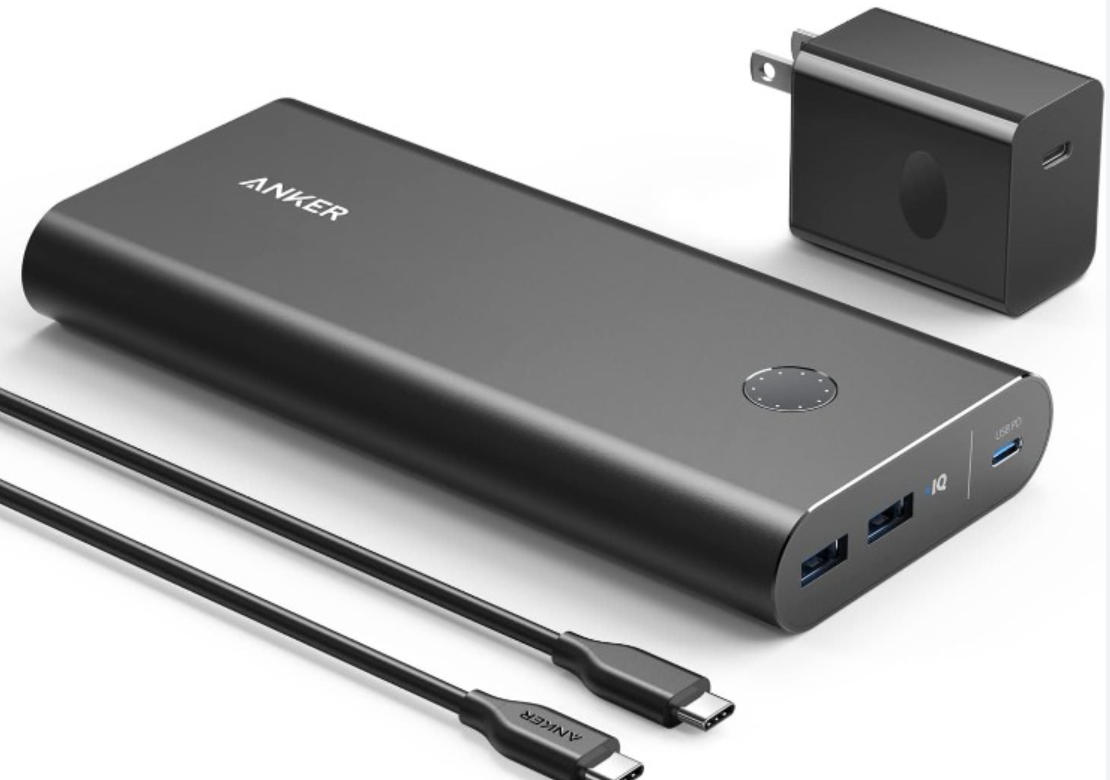
Sixty-seven percent. After fourteen days. I had dragged 617 grams of lithium cells through four cities, two countries, and approximately eleven airport security trays — taking off my shoes, unpacking my laptop, unzipping the dedicated electronics pouch, placing the thing in its own separate bin like it was carrying state secrets — and I had used less than a third of it. The charging cable I’d packed specifically for the power bank had never left its little storage bag.
This is the experience that turned me from a casual observer of the power bank market into someone with opinions. Specific, mildly inconvenient opinions. The kind that make me say things at dinner parties that nobody asked for.
Here’s the core problem: the portable charging market has convinced the average consumer that bigger is always safer, that running out of battery is a catastrophe to be avoided at any cost, and that the correct response to this anxiety is buying a power bank the size of a small hardcover book. And most of the time, for most people, this is completely wrong.
Let me walk you through how to actually buy one.
The number on the box is lying to you, and not in the way you think
Every power bank is labeled with a mAh number. The Anker 26800 says 26,800mAh on the box. The Anker 10,000mAh Nano says 10,000mAh. You might assume, reasonably, that a 26,800mAh power bank will deliver 26,800mAh to your devices. This assumption is wrong, and the reason why is mildly infuriating once you understand it.
The cells inside a power bank store energy at 3.7 volts. Your phone charges at 5 volts, sometimes higher. That voltage conversion — from the cells’ 3.7V to the output’s 5V — loses energy. The conversion efficiency is typically around 85-90% for a good power bank. Which means that a 26,800mAh battery rated at 3.7V delivers somewhere around 17,000 to 19,000mAh at 5V output, in real conditions, with a real phone on the other end.
Independent lab testing has confirmed this: the Anker 26800 delivered approximately 24,100mAh of usable power in controlled discharge tests — that’s 90% efficiency, which is actually excellent for the category. But that 24,100mAh is at 5V, meaning the effective capacity to your device is closer to 17,000-18,000mAh at typical phone charging voltages. Still massive. Still more than enough. But not 26,800. The number on the box describes the internal cell capacity, not what comes out.
I’m not telling you this to make you feel cheated. Anker isn’t doing anything unusual; this is standard industry practice and it’s how every power bank is rated. I’m telling you because this changes the math. If you bought a 10,000mAh power bank expecting to get your 4,500mAh iPhone battery from zero to full twice, you might get one and a half full charges instead of two, and that difference is physics, not false advertising.
The practical upshot: when a manufacturer says their power bank will charge your phone “seven times,” they mean seven charges of a small older phone in ideal lab conditions. For a modern flagship with a 5,000mAh battery, the same bank might manage four to five charges. Still generous. Just not seven.
How to figure out what size you actually need
Here’s the calculation nobody does before buying a power bank, but everyone should.
Take the battery size of your main device in mAh. Add 20% to account for conversion losses. That’s the minimum power bank capacity you need for one full charge. Multiply by the number of charges you realistically need between opportunities to plug into a wall.
My phone has a 4,422mAh battery. One full charge needs roughly 5,300mAh from the power bank after losses. If I’m on a day trip and want one backup charge, 10,000mAh is genuinely plenty — I’ll get almost two full charges from it and still have capacity left. If I’m traveling for three days without reliable wall access, 20,000mAh gives me three to four full charges, which covers even aggressive use.
The 26,800mAh tier only makes consistent sense if: you’re charging a laptop (a MacBook Air’s 52.6Wh battery needs roughly 60Wh from the bank, which is about 16,000mAh at 3.7V), you’re charging multiple devices simultaneously for multiple days, or you’re going somewhere without any power access for an extended period. Festival camping. Remote fieldwork. A road trip with no charging ports and three people’s devices to keep alive.
If you’re buying a power bank for daily city life — commuting, working in coffee shops, the occasional flight — the 26800 is a lot. More than you need most days. And “a lot” in a power bank means weight, bulk, and airport security trays.
The airport rules, which are important and frequently misunderstood
Power banks are not allowed in checked baggage. Ever. On any airline. Full stop. If you pack one in your checked luggage, the best outcome is that it gets confiscated at the airport. The worst outcome is significantly more dramatic. Lithium batteries in cargo holds are a genuine fire risk, which is why the rule exists, and the rule is enforced.
In carry-on baggage, the limit is 100Wh without requiring airline approval, and up to 160Wh with approval. The Anker 26800 is rated at 96.48Wh — comfortably under the 100Wh limit with a bit of margin. This is not an accident. Anker designed the 26800 to stay under 100Wh so it clears carry-on rules on every airline globally without requiring you to ask permission or carry documentation.
The newer Anker Prime Power Bank (26,250mAh) is 99.75Wh — also under the limit, also by design. If you find yourself looking at a power bank over 100Wh at any capacity, confirm with your specific airline before you travel. Some airlines are stricter than others, especially in certain regions of Asia and Australia where enforcement is tighter than at US airports.
One more thing that catches people: the 100Wh limit is per power bank, but most airlines limit you to two power banks total in carry-on. If you are the person who travels with three power banks, you are living on the edge in a way that has nothing to do with battery life.
The Anker lineup in 2026, honestly sorted
Anker dominates this market because they have decades of manufacturing relationships, their quality control is genuinely better than most competitors at comparable price points, and their customer support has a reputation that most budget competitors can’t match. Independent teardowns consistently find Grade-A cells inside Anker products, whereas no-name brands on Amazon sometimes contain cells that are… not that.
This doesn’t mean you must buy Anker. It means Anker is a safe default and a useful reference point for comparison.
The Anker Nano Power Bank (10K, 45W) is $35-45 and is the one I now take on most trips. It weighs 227 grams — roughly the weight of a large apple — has a built-in retractable USB-C cable so you don’t need to pack a separate charging cable, and delivers 45W output which fast-charges any modern phone. The LED display shows remaining capacity in real time rather than just a vague four-dot indicator. 10,000mAh is enough for two charges of most phones, one full charge of a small tablet, and several earbuds charges with capacity to spare. It fits in a jacket pocket. It fits in the small outer pocket of a backpack. It does not require its own dedicated compartment. I have stopped apologizing for liking this thing more than products that cost three times as much.
The Anker Prime Power Bank (20K) is $79-99 and is what I’d call the serious traveler’s option. 20,000mAh, 200W total output, two USB-C ports each capable of 100W output, and a display that shows exactly how many watts are flowing in both directions in real time. This is the power bank for someone who charges a laptop regularly on the go, who travels multiple days between wall outlets, or who genuinely needs to charge two devices simultaneously at full speed. At 440 grams it’s heavier than the Nano but meaningfully more capable. If you’ve ever sat in an airport lounge calculating whether your laptop has enough battery to survive the flight plus the meeting immediately after, this one solves that problem.
The Anker PowerCore 26800 is $60-80 depending on which version and where you buy it. It delivers. The capacity is real, the build quality is solid, the Anker reputation applies. The metal exterior is durable but will scratch; if you’re the kind of person who winces at marks on metal, keep it in the included pouch. It recharges in approximately 4.5 hours with the right charger, which is faster than most competitors of similar capacity. At 617 grams, it is heavier than many people realize from the product listing. I cannot emphasize this enough: 617 grams is the weight of a medium hardcover book. You will feel it in your bag. If you have a bad shoulder, this is information worth having before you’re halfway through a day at a conference.
The Anker Zolo Power Bank (20K) is a newer addition at around $40-50 and represents the “I want most of the Prime’s capacity at half the price” option. Built-in USB-C cable, 30W max output, 20,000mAh. Doesn’t fast-charge laptops efficiently — 30W is fine for phones and tablets but slow for anything requiring 65W or more. For people who don’t need to charge laptops from a power bank, this is excellent value.
The capacity anxiety trap
I want to spend a moment on the psychology of this, because I think it explains why the 26800 outsells what it needs to.
Battery anxiety is real and it has been deliberately cultivated by device manufacturers through years of conditioning. The moment you first saw your phone at 12% with two hours left in your day, something shifted in your brain. You started watching the percentage. You started calculating. You plugged in at 50% “just in case.” This is not irrational — it’s a rational response to a real constraint — but it creates a specific consumer behavior: when buying a power bank, people systematically overestimate how much capacity they need because they’re making the purchase in an emotional state, imagining the worst-case scenario rather than the average scenario.
The worst case for me is a missed flight delay that leaves me in an airport for eight hours with no outlets and a full day’s work to get through. This has happened to me twice in ten years of frequent travel. For this scenario, yes, the 26800 is the right call. But I was designing every purchasing decision around a situation that occurs twice per decade and lugging the consequence of that decision through the other 99.8% of my trips.
The average case is a long work day, a longer-than-expected evening, and needing one or two phone charges. The 10K handles this. Completely. Without drama.
Buy for your average day. Keep a bigger one for the occasions that genuinely require it, or accept that you might need to find an outlet once on an unusually long day.
What I actually carry now
My daily bag: the Anker Nano 10K, 45W. Retractable cable, 227 grams, done. It lives in the front pocket of my backpack and I forget about it entirely until I need it.
My travel bag for trips under five days: the Anker Prime 20K. 440 grams, two USB-C ports, charges my MacBook Air to full and has plenty left for my phone. This handles every scenario I actually encounter while traveling, including one particularly memorable afternoon in Tokyo when my phone, my iPad, and my colleague’s phone all needed charging simultaneously and I had exactly one power bank.
The 26800 still lives in my apartment. I use it occasionally when I know in advance that I’m going somewhere with genuinely no power access for multiple days — a camping trip, a long outdoor event. For anything else, it stays home.
The brands that are worth knowing besides Anker
Baseus has gotten genuinely good. Their Bowie 20,000mAh supports multiple fast charging protocols simultaneously — PD 3.1, PPS, Quick Charge 5 — which is relevant if you have a mix of Android devices from different manufacturers, each with slightly different fast-charging preferences. At $45-60, it undercuts the comparable Anker Prime significantly. The trade-off is thermal management: under heavy load, Baseus runs hotter than Anker at the same wattage, which isn’t dangerous but is worth knowing if you’re charging in a hot environment.
UGREEN has quietly become a respected alternative, particularly for their 100W+ laptop-focused banks. If your primary use case is keeping a laptop charged and phones are secondary, their lineup is worth checking.
For budget options under $30: INIU’s 10,000mAh power banks have UL certification, use ATL cells (the same manufacturer that supplies Apple), and consistently deliver close to rated capacity in independent tests. At $20-25 for a 10K, they’re the pick for someone who needs basic backup charging without spending Anker prices.
The brands to avoid are any that you’ve never heard of with suspiciously high mAh numbers and suspiciously low prices, without any visible certifications. An uncertified lithium battery pack is a small thermal event waiting for the right circumstances. The $15 power bank from a no-name brand you found scrolling through Amazon at 1am is not worth what you might save.
The actual buying decision
If you’re replacing or buying your first real power bank in 2026:
You commute, work in the city, and occasionally travel: Anker Nano 10K at $35-45. Stop overthinking it.
You travel frequently, work on a laptop, need to charge multiple devices: Anker Prime 20K at $79-99. It costs more and it’s worth it.
You’re going somewhere genuinely remote for multiple days, or charging a laptop is critical: Anker PowerCore 26800 at $60-80. The weight is real and so is the capacity. Accept both.
You want to save money and don’t need laptop charging: INIU B6 10K at $20-25. Certified, reliable, boring in the best possible way.
You want something slim that lives in your purse permanently and primarily charges your iPhone: any 5,000-10,000mAh MagSafe-compatible power bank from Anker, Baseus, or Mophie. The Baseus Picogo 5K at $25-30 is thin enough to forget you’re carrying it and charges an iPhone 15-16 to full once without drama.
The 26800 in my apartment is a good product. It does exactly what it claims. It’s just not the product most people need most of the time, and nobody in the power bank marketing department has a financial incentive to tell you that.
I, on the other hand, do not have a financial incentive to tell you anything. So here it is: buy the smaller one. Charge it the night before you travel. Stop thinking about it.
The 67% of battery I didn’t use on that two-week trip has been funding my peace of mind ever since.