
The package disappeared on a Wednesday afternoon. It was a book I’d been waiting on — nothing valuable, maybe $18 — but it was gone from my front step and the delivery confirmation email was mocking me with its cheerful font. I checked the camera footage on my phone and watched, in 1080p clarity, a man walk up my path, look directly into the Ring doorbell, pick up my package, and walk away.
This is where the story takes a turn most people don’t expect.
Seeing the footage didn’t make me feel better. It made me feel worse, but in a more specific way. I now had a face. I had a timestamp. I had a clear record of a crime that was, in the grand scheme of things, a $18 inconvenience. And I had absolutely no idea what to do with any of it except feel a complicated mix of violated, vindicated, and slightly ridiculous about caring this much about a book.
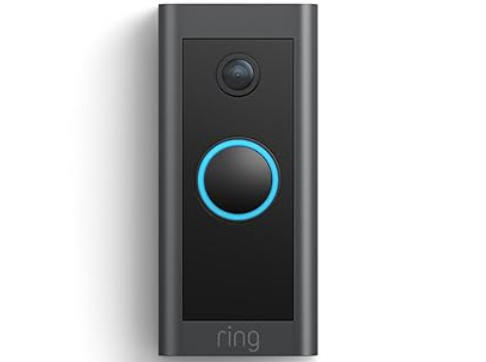
That experience is the Ring Video Doorbell in miniature. It gives you information you previously didn’t have, and then you have to figure out what information is worth having and at what psychological cost. The doorbell itself is fine — good, actually. The question worth asking before you buy one is whether you want to know everything that happens at your front door at all times.
Buy Ring Video Doorbell from Amazon https://amzn.to/4nMLxqL
The answer, for most people and most situations, is yes. But it’s worth thinking about.
The Ring lineup in 2026, and why the naming is deliberately confusing
Ring makes eight doorbells. This is too many. The naming — Video Doorbell, Battery Doorbell Plus, Battery Doorbell Pro, Wired Doorbell Plus, Wired Doorbell Pro, Battery Doorbell Pro 4K, Elite — appears designed by someone whose primary goal was to make comparison shopping feel like homework.
The version that makes sense for most first-time buyers in 2026 is the Battery Doorbell Plus, at $99-149 depending on sales. It does everything the category promises: 1536p video (sharper than 1080p, meaningfully so in daylight), a 150° horizontal by 150° vertical field of view that captures your porch in a roughly square frame rather than the letterbox format older doorbells used, color night vision, motion detection with person vs. package vs. car classification, and two-way audio. Battery-powered means no existing doorbell wiring required — you drill two screws, press the button, connect to Wi-Fi, and it’s working in under 20 minutes.
The battery lasts six to twelve months per charge depending on how much motion it’s recording. You pop it off the mount, charge it via USB-C for a few hours, put it back. If you have existing doorbell wiring from a previous doorbell installation, you can wire it in and never think about battery life again.
The Wired Doorbell Plus ($180) is the same camera, permanently wired, with 2K resolution and slightly better low-light performance. If your house already has doorbell wiring and you’re the kind of person who would think about the battery every three months and feel mild dread, spend the extra $80 and wire it.
Skip the base Ring Video Doorbell at $79. The video quality gap between the base model and the Plus is noticeable enough that the $20-30 price difference isn’t worth the downgrade.
The 4K models and the Elite are for people with specific requirements — large properties, forensic-level footage needs, professional installation — and cost $250-350. These exist. They’re fine. They’re not what most people need from a front door camera.
The subscription math, because nobody leads with this
Ring is a hardware company that makes most of its money on subscriptions. The hardware price is the come-on; the Ring Protect plan is the business model. This is worth understanding before you buy.
Without a Ring Protect subscription, your doorbell will detect motion, ring when someone presses it, let you see live video, and let you do two-way talk. It will not save any footage. The moment you look away from live view, that video is gone. If the package thief comes when you’re in a meeting, you’ll get a notification that motion was detected. You’ll open the app and see your empty porch. You will have no footage.
The Ring Solo plan is $4.99 per month ($49.99 per year) for one device — it gives you 180 days of video history, person and package alerts, and the Alexa Greetings feature. The Ring Multi plan is $9.99 per month for unlimited Ring devices on your account. These are the plans most households need.
Over three years: $150 for the Ring Multi plan on top of the hardware cost. This is real money and almost no review mentions it prominently. A $99 doorbell costs $249 over three years in a basic configuration with subscription.
This changes the competitive landscape significantly when you put it next to the alternatives.
How Ring compares to its actual competition
| Ring Battery Doorbell Plus | Google Nest Doorbell | Eufy S220 (Battery) | Arlo Video Doorbell 2K | |
|---|---|---|---|---|
| Hardware price | $99–$149 | $179 | $99–$120 | $59–$99 |
| Video resolution | 1536p | 1080p | 2K | 2K |
| Cloud subscription required | Yes ($4.99–$9.99/mo) | Yes ($10–$20/mo) | No | Optional ($2.99/mo) |
| Local storage option | No | No | Yes (microSD/HomeBase) | Yes (USB) |
| 3-year total cost (solo device) | ~$249–$309 | ~$539 | ~$99–$120 | ~$167–$207 |
| Smart home ecosystem | Amazon/Alexa | Google Home | Alexa/Google | Alexa/Google/HomeKit |
| Apple HomeKit | No | No | Yes | Yes |
| Privacy track record | Shared footage with police without warrants (stopped in 2024) | Cloud only, warrant required | Claimed “local” but wasn’t (2022 incident) | Warrant required |
| Field of view | 150° × 150° | 145° × 180° | 160° × 120° | 180° × 180° |
A few things in that table require honest explanation.
The Ring privacy situation: until 2024, Ring had a program called Neighbors Public Safety Service that allowed law enforcement to request doorbell footage without a warrant and without notifying users. Ring ended this program under significant public pressure. The footage you record now requires a legal process for law enforcement to access. Whether the history of that program affects your comfort level is a personal question, but it’s information worth having.
The Eufy situation from 2022: Eufy marketed its cameras as storing footage locally only — no cloud, complete privacy. Researchers discovered that the cameras were in fact uploading thumbnail images to Eufy’s cloud servers even when cloud storage was disabled. Eufy’s response was inadequate. They’ve since updated their practices, but the incident established that “local storage” claims from any company should be verified rather than taken at face value.
The Arlo and Google require-warrant policies mean exactly what they say: a law enforcement request for your footage requires a legal subpoena or warrant. This is the standard you probably assumed all smart home cameras operated under. Some do, some don’t.
The Nest doorbell has the worst three-year value in the category. The hardware costs more and the subscription costs more — Google’s Familiar Faces feature, which tells you which specific people are at your door, requires the $10+/month Nest Aware plan. Over three years that’s $360-720 in subscription fees on top of the hardware. The video quality isn’t better enough to justify this unless you’re already deep in the Google ecosystem and the integration matters more than the cost.
The Eufy S220 is the genuinely strong competition to Ring for people who want no subscription fees. You pay once, footage stores locally on a microSD card or their HomeBase hub, and that’s it. The 2022 incident is real, but their current privacy practices are substantially better. If no monthly fees is a hard requirement, Eufy is worth serious consideration over Ring.
The installation, which is easier than you think and harder than the box implies
The Battery Doorbell Plus comes with a mounting bracket, two screws, a wall anchor for brick or stucco, a level, and a charging cable. Installation on a wooden door frame takes about fifteen minutes. Installation on brick requires drilling, which takes about thirty minutes and some confidence with a drill.
The thing the quick start guide glosses over: the wedge kit. Ring sells an optional angled mount ($10-15) that tilts the doorbell downward or to the side. If your front door is set back from the street and the doorbell points straight ahead, you’ll capture mostly sky and the top of visitors’ heads. The wedge kit aims the camera more usefully. I learned this by looking at footage of my delivery person’s hairline for a week before figuring out what was wrong.
Also: the Ring Chime. The doorbell itself does not make a sound inside your house unless you pair it with a Chime ($29.99) or an Alexa-enabled device you already own. The notification on your phone is instant; the audible chime in your living room is optional hardware. If you have an Echo Dot you already like, you can set that as your chime through the Ring app and skip the additional purchase.
What changes after you install it
The first week: you watch every notification. Someone walks by on the sidewalk. A car parks across the street. A squirrel triggers the motion zone and you learn to adjust sensitivity settings. You show people your doorbell footage the way new parents show ultrasound photos.
After the first month: you stop watching notifications in real time and start checking the footage retrospectively when something specific happens — the Amazon notification says delivered but the package isn’t there, someone rang and didn’t leave a note, you heard something but aren’t sure. The doorbell becomes less of a live monitoring system and more of a DVR for your front door.
After six months: it fades into the background entirely, the way a smoke detector does. You know it’s there. You check it occasionally. It logs things quietly. When something matters, the footage is there.
This arc is the correct thing to have set expectations for. The Ring Video Doorbell is not a home security system — it’s a record-keeper and an intercom. It didn’t deter the person who took my book, because deterrence requires people to care about cameras, and package thieves have a complicated relationship with shame. What it gave me was information I mostly didn’t know what to do with.
For deliveries, for seeing who’s at the door before you answer it, for the low-grade comfort of knowing your porch is monitored: the Ring Battery Doorbell Plus at $99 plus $50 per year in subscription is a reasonable purchase. For people who want zero ongoing fees and are comfortable with a company whose 2022 privacy incident has since been corrected: Eufy is the alternative to take seriously.
For people who want to be able to identify their regular visitors by name without looking at the app: that’s Nest Aware at $240 per year. That’s a very specific feature at a very significant premium.
My book was not recovered. The footage is somewhere in Ring’s cloud storage, available for 180 days per my subscription plan. I did not file a police report over an $18 book. The man who took it has excellent facial recognition footage of himself doing so, which seems like a fair amount of documentation for the universe to have on the matter.